Fitting the base plate — the essentials at a glance
In this chapter you'll learn which base plates are suitable for the hoof boot, how to determine the correct size and how to precisely fit the base plate to the hoof. Clean work at this stage is the foundation for a well-fitting hoof boot.
The base plate variants
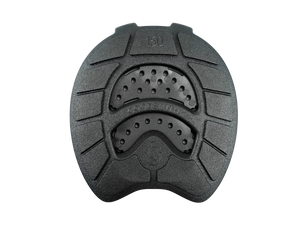
- Standard base plate with grid and snow grip — the closed variant is the standard choice for the hoof boot
- Open variant — also usable
- Rehab plate — more stable, rounded (easier turning), with a recessed sole area and a central bar. Can also be used without a therapeutic indication
Determining the size
- Measure the hoof width at the widest point (place the ruler straight)
- Measure the hoof length from toe to end of the heels
- Enter the values into the size finder on the website
- Before fitting, hold the components (including the side parts) against the hoof and check the spacing
Prerequisite for fitting
The hoof should have been trimmed no more than two weeks ago — directly after a fresh trim is also fine.
Fitting step by step
- Mark the center of the toe on the hoof (forward from the frog)
- Mark the base plate at the frog (use the small pre-marking)
- Center the base plate and trace the outline of the hoof
- Remove the mounting aids — they are only for marking and do not stay on the boot
- Grind the base plate down at a 90° angle, perpendicular (wear safety goggles!)
- Check against the hoof
Hoof boot-specific details
- Toe area: capture the shape of the hoof exactly
- Heel area: leave 2–3 mm for horn growth — the boot is flexible and moves with it
- Heels generally flush: too long → the horse steps into the boot, too short → too little support
 Find a hoof expert
 Become a partner