 Find a hoof expert
 Become a partner

Disposing of Plastic Products Correctly
Updated on 10/13/2026
In short
Plastic parts and plastic residues belong neither in general waste nor on the muck heap, but should be collected separately for your region's recycling collection. Pure hoof horn can go on the muck heap as usual.
More articles in All About Hoof Protection6
Why this topic matters to us
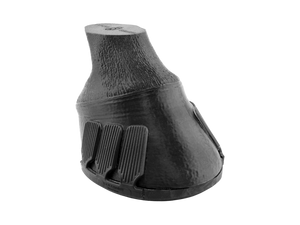
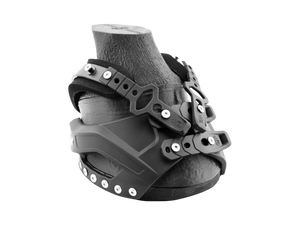
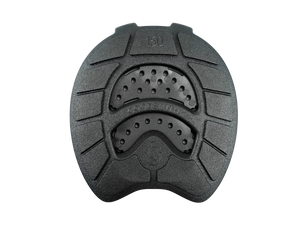
Our products are made entirely of TPU X, a thermoplastic material, and are designed for long-term use on the horse. They are built to last. Even so, there comes a point when a base plate or another component needs to be replaced.
What happens to the material afterward matters to us. Plastic belongs neither in the natural cycle nor on the manure pile. By disposing of it correctly, you make a concrete contribution to ensuring the plastic is recycled properly and doesn't end up in the soil or the environment.
When a part needs to be replaced
Ideally, your farrier or hoof trimmer takes worn or replaced plastic parts with them and disposes of them properly – just as is common with other conventional shoes.
If you dispose of the parts yourself, please note: do not throw them in general waste or on the manure pile. Collect them separately as plastic waste and take them to your local recycling collection. Depending on where you live, this may be the recycling bin, the yellow bin, or the recycling center. The rules of your local waste management authority apply. If in doubt, a quick look at your municipality's website will help.
Important during hoof trimming
Two clearly separate materials arise during hoof work:
- Pure hoof horn: can go on the manure pile as usual.
- Plastic residue from fitting: please sweep this up separately and dispose of it as plastic waste. Plastic does not belong on the manure pile and should not be mixed with organic material.
Clean separation is especially important when manure is later spread or processed further.
Taking responsibility together
We are aware that details like this can easily get overlooked in everyday work. Still, they have a noticeable effect.
By consistently separating plastic residue and disposing of it properly, we prevent it from entering the natural cycle uncontrolled. The extra effort is small, but the contribution is meaningful.
🤝 Thank you for taking responsibility and playing your part!
Thank you for your feedback.
This might also help
- Can I Attach the Glue-on horseshoe or Hoof Boot Myself?Professionals & Advice
- Find a Farrier/Hoof TrimmerProfessionals & Advice
- Personal Advice: Which Photos and Details Help?Professionals & Advice
- What Can I Do If Snow Balls Up in the Goodsmith Base Plate?Winter & Environment
